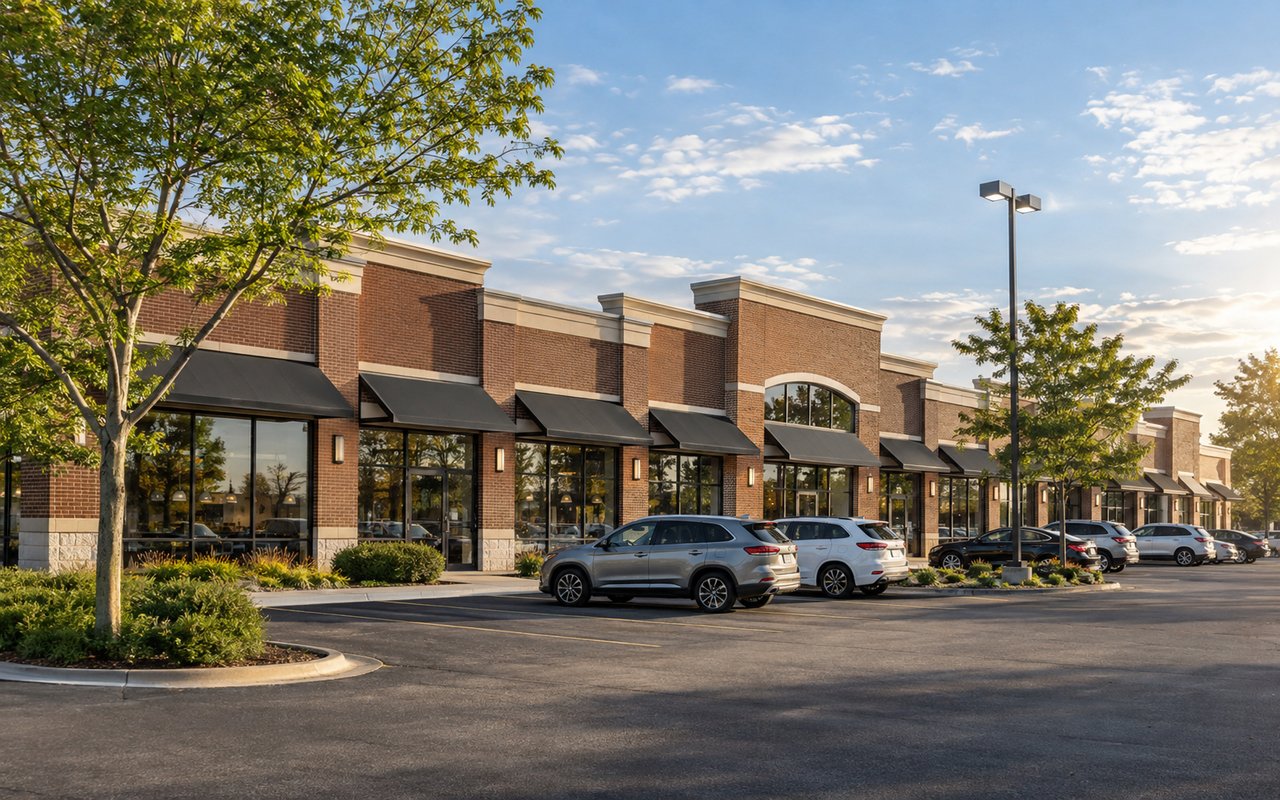
Retail commercial real estate in Chicago’s northwest suburbs is highly local. A space that performs well in one community, shopping center, or intersection may struggle only a few miles away. Traffic patterns, visibility, access, parking, demographics, neighboring tenants, and municipal requirements can all affect a retail property's success and value.
The Rafidia Lezza Team at Kawash Group specializes in retail commercial real estate throughout Chicago’s northwest suburbs. We represent businesses searching for space, landlords leasing commercial properties, and investors buying or selling shopping centers and other retail assets.
Our work includes retail tenant representation, landlord representation, and investment sales across communities including Palatine, Arlington Heights, Mount Prospect, Buffalo Grove, Des Plaines, Prospect Heights, Wheeling, Rolling Meadows, Schaumburg, Hoffman Estates, Barrington, and surrounding suburban markets.
Why Retail Commercial Real Estate Is Hyperlocal
Selecting a retail location requires more than finding an available storefront at an acceptable rental rate. A successful location must work operationally, financially and geographically for the specific business occupying it.
Important factors can include:
- Daily traffic counts and traffic patterns
- Access from both directions of travel
- Building and monument-sign visibility
- Parking availability and configuration
- Nearby residential and daytime populations
- Surrounding businesses and traffic-generating anchors
- Municipal zoning and permitted uses
- Existing restaurant or medical infrastructure
- Delivery and loading access
- Base rent, property taxes and common-area expenses
- Competition within the immediate trade area
Two properties with similar square footage and asking rents can produce very different results. One may offer strong visibility, convenient access and complementary neighboring tenants. The other may be difficult to enter, poorly positioned or burdened by excessive occupancy costs.
Understanding these differences is where experienced local representation becomes valuable.
Retail Tenant Representation
Retail tenant representation helps businesses identify, evaluate and negotiate commercial space. A tenant representative works on behalf of the business searching for a location—not the property owner marketing the vacancy.
The process begins by understanding the tenant’s actual requirements. That includes more than a target square footage. We consider the business’s customer base, preferred communities, parking needs, visibility requirements, buildout, zoning, delivery needs and total occupancy budget.
Our retail tenant representation services can include:
- Defining the tenant’s location and property requirements
- Identifying listed and off-market opportunities
- Contacting landlords and listing brokers
- Comparing base rent, taxes, insurance and CAM expenses
- Evaluating visibility, parking, access and neighboring tenants
- Reviewing zoning and use restrictions
- Preparing and negotiating letters of intent
- Coordinating with attorneys, lenders, contractors and other professionals
- Assisting throughout lease negotiations and due diligence
The lowest advertised rent is not always the lowest-cost option. An inexpensive space may require a substantial buildout, lack appropriate utilities or carry operating expenses that significantly increase the tenant’s total monthly obligation.
For restaurants, medical practices and other specialized users, the physical condition and infrastructure of the property can be especially important. Ventilation, electrical service, plumbing, grease traps, floor drains, accessibility requirements and municipal approvals can materially affect both cost and timing.
Our role is to help tenants understand the full picture before committing to a location.
Retail Landlord Representation
Landlord representation is the process of positioning, marketing and leasing a commercial property on behalf of its owner.
Effective leasing requires more than placing a sign in the window or uploading the vacancy to a listing platform. The property must be presented to the right audience, priced realistically and supported by direct outreach to qualified businesses and commercial real estate brokers.
Our landlord representation process can include:
- Reviewing the property and current market position
- Evaluating asking rent and additional occupancy expenses
- Identifying the most appropriate tenant profiles
- Creating professional leasing materials
- Publishing the property across commercial listing platforms
- Conducting direct outreach to prospective tenants
- Responding to inquiries and coordinating property tours
- Qualifying prospects
- Negotiating letters of intent
- Coordinating the transaction through lease execution
Tenant selection also affects the long-term performance of a shopping center. A well-planned tenant mix can generate cross-traffic, improve customer convenience and make the property more attractive to future tenants and investors.
Landlords must balance rental rate, tenant credit, lease term, improvement costs and the effect a new tenant may have on the rest of the center. The highest initial offer is not always the strongest long-term transaction.
Shopping-Center and Retail Investment Sales
The value of a shopping center is primarily connected to the income it produces, the reliability of that income and the property’s potential for future growth.
Investors typically evaluate:
- Current net operating income
- Existing lease terms
- Tenant credit and payment history
- Remaining lease term
- Upcoming lease expirations
- Vacancy and lease-up potential
- Below-market or above-market rents
- Property-tax exposure
- Deferred maintenance
- Capital-improvement requirements
- Location and surrounding demographics
- Financing conditions
- Potential future redevelopment or repositioning
A fully occupied center is not automatically a low-risk investment. Several tenants may have leases expiring during the same period, or the existing rents may be difficult to replace if tenants leave. Conversely, a center with vacancy may present significant upside when the property is well located and the vacant space can realistically be leased.
Our investment-sales work focuses on presenting the property’s current performance, risks and future opportunities clearly. This includes reviewing operating information, understanding the rent roll, identifying the likely buyer profile, preparing marketing materials and reaching qualified local and regional investors.
Owners considering a sale should begin preparing before the property formally enters the market. Organizing leases, financial statements, expense records, property-tax information and capital-improvement history can make the property easier to evaluate and reduce delays during due diligence.
Understanding Retail Occupancy Costs
Commercial rent is often quoted as a price per square foot, but that figure may not represent the tenant’s complete obligation.
In a triple-net lease, commonly called an NNN lease, the tenant generally pays base rent plus its proportionate share of property taxes, building insurance and common-area maintenance expenses.
For example, a property may advertise a base rent of $24 per square foot. If taxes and CAM add another $9 per square foot, the initial occupancy cost is closer to $33 per square foot before utilities, maintenance, buildout and other business expenses.
Tenants should compare properties using the complete estimated occupancy cost rather than base rent alone. They should also understand how expenses are calculated, reconciled and increased throughout the lease.
Landlords benefit from presenting these expenses clearly. Accurate information allows prospective tenants to make informed decisions and reduces the likelihood of misunderstandings later in the transaction.
What Makes a Strong Suburban Retail Location?
There is no single formula that works for every business. The right property depends on how the business attracts and serves its customers.
A convenience-oriented business may prioritize easy access and proximity to nearby households. A destination restaurant may be able to draw customers from a wider area but require substantial parking and prominent signage. A medical tenant may value accessibility, population demographics and proximity to complementary healthcare providers.
Strong suburban retail locations commonly offer a combination of:
- Clear visibility from the road
- Convenient entrances and exits
- Adequate customer parking
- Recognizable neighboring businesses
- Strong surrounding demographics
- Signage opportunities
- A functional building layout
- Sustainable total occupancy costs
- A municipality that permits the intended use
The most attractive-looking property is not necessarily the best-performing property. A disciplined site-selection process should connect the real estate decision to the business’s actual operating model.
Retail Markets Across Chicago’s Northwest Suburbs
Chicago’s northwest suburbs include established downtown districts, major commercial corridors, neighborhood shopping centers and regional retail destinations. Each community presents different opportunities for tenants, property owners and investors.
Palatine and Arlington Heights offer a combination of neighborhood retail, downtown environments and heavily traveled commercial corridors. Mount Prospect and Des Plaines benefit from established residential populations, transportation access and a variety of retail and service-oriented properties.
Buffalo Grove, Wheeling and Prospect Heights contain neighborhood centers, restaurant opportunities, medical space and properties serving both residential and employment populations. Schaumburg and Hoffman Estates provide access to larger regional trade areas, major roadways and significant concentrations of retail and office users.
Even within the same municipality, performance can vary substantially by intersection and side of the street. That is why market knowledge must extend beyond citywide statistics.
Frequently Asked Questions
What does a retail tenant representative do?
A retail tenant representative helps a business find and evaluate commercial locations, compare occupancy costs and negotiate proposed lease terms. The representative works on behalf of the tenant throughout the search and negotiation process.
Who pays a commercial tenant representative?
In many transactions, the property owner pays the brokerage commission under an agreement with the brokers involved. The compensation arrangement should always be disclosed and confirmed for the particular transaction.
What is CAM in a retail lease?
CAM stands for common-area maintenance. It can include expenses associated with operating and maintaining shared portions of a shopping center, such as parking areas, landscaping, snow removal, exterior lighting and property management. The exact charges depend on the lease and property.
What is the difference between gross rent and NNN rent?
Gross rent generally combines most property expenses into one rental amount. Under a triple-net or NNN structure, the tenant pays base rent plus its share of property taxes, insurance and common-area expenses.
Should a tenant work directly with the landlord’s broker?
The landlord’s listing broker represents the property owner. A tenant may choose to obtain separate representation from a broker focused on the tenant’s location, financial and operational objectives.
How is a shopping center valued?
Shopping centers are commonly valued based on net operating income, market capitalization rates, lease terms, tenant quality, vacancy, property condition and opportunities to increase income. The strength and durability of the income are often as important as the current income amount.
When should an owner begin preparing to sell a shopping center?
Owners should ideally begin preparing before formally listing the property. Resolving missing documentation, reviewing leases, addressing deferred maintenance and improving the presentation of the property can make the offering more attractive and reduce complications during due diligence.
How long does it take to lease a retail space?
The timeline varies based on location, asking rent, property condition, permitted use and demand. Specialized uses may require additional time for zoning, inspections, architectural plans, financing and construction.
Work With a Northwest Suburban Retail Real Estate Team
Whether you are opening a new location, relocating an existing business, leasing a retail vacancy or considering the sale of a shopping center, the real estate decision can have a long-term effect on your financial performance.
The Rafidia Lezza Team at Kawash Group provides retail tenant representation, landlord representation and investment-sales services throughout Chicago’s northwest suburbs.
Contact our team to discuss your space requirement, available property or investment objectives.