Opening a restaurant is exciting, but picking the right location can make or break the concept before your first customer walks in. If you are considering Melrose Park, you are likely weighing traffic, visibility, parking, lease terms, and whether the market can support your idea. This guide will help you evaluate Melrose Park more clearly so you can move forward with better questions, sharper site criteria, and fewer surprises. Let’s dive in.
Why Melrose Park Stands Out
Melrose Park is a compact suburban market with about 24,000 residents across 4.35 square miles. That density, at 5,696.3 people per square mile, creates a tighter trade area than many suburban locations. For restaurant operators, that can mean more concentrated customer activity and stronger corridor-based demand.
The local spending base is also notable. Census data reports $1.201 billion in total retail sales in 2022, with retail sales per capita of $50,373. While those figures are not restaurant-only, they do point to meaningful consumer activity in the village.
The resident profile adds another layer to your planning. Census data shows 77.0% of residents identify as Hispanic or Latino, 34.8% are foreign-born, and 70.8% speak a language other than English at home. For many operators, that may support practical decisions like bilingual staffing, translated menus, and thoughtful menu positioning.
Restaurant Corridors to Watch
Melrose Park does not appear to spread restaurant demand evenly across the village. The strongest food activity is concentrated along several established corridors and nodes. That matters because a great concept in the wrong pocket can still struggle with exposure and access.
The village’s restaurant directory points to active clustering along North Avenue, Lake Street, Mannheim Road, Winston Plaza, 19th Avenue, and 25th Avenue. These areas include a mix of national chains and local operators such as Starbucks, Chick-fil-A, Olive Garden, IHOP, Wingstop, Panda Express, Raising Cane’s, and local concepts. That type of co-tenancy can signal existing food traffic and customer familiarity with dining in the area.
If you are choosing between multiple Melrose Park sites, start by asking where customers already expect to stop for food. In many cases, being near established restaurant activity can reduce the burden of creating demand from scratch. It can also improve lunchtime, dinner, and impulse traffic if your use complements nearby tenants.
Access and Convenience Matter
A restaurant site is not just about the building. It is also about how easily customers, staff, and delivery drivers can reach it. In Melrose Park, transportation access is stronger than in many suburban submarkets.
The village lists Metra’s Union Pacific West Line and Pace bus service on its transportation page. Pace Route 303 serves Melrose Park on weekends between Forest Park and North Ave./9th Ave. and connects to the Metra UP-West line at the Melrose Park station. The village also states that its Dial-A-Ride program serves locations within village boundaries.
That mix of transit options may help sites that benefit from employee access or customer convenience beyond pure car traffic. Still, convenience is local, not abstract. A property near a major corridor may perform very differently from one that is harder to enter, exit, or notice at speed.
Evaluate Visibility Before Rent
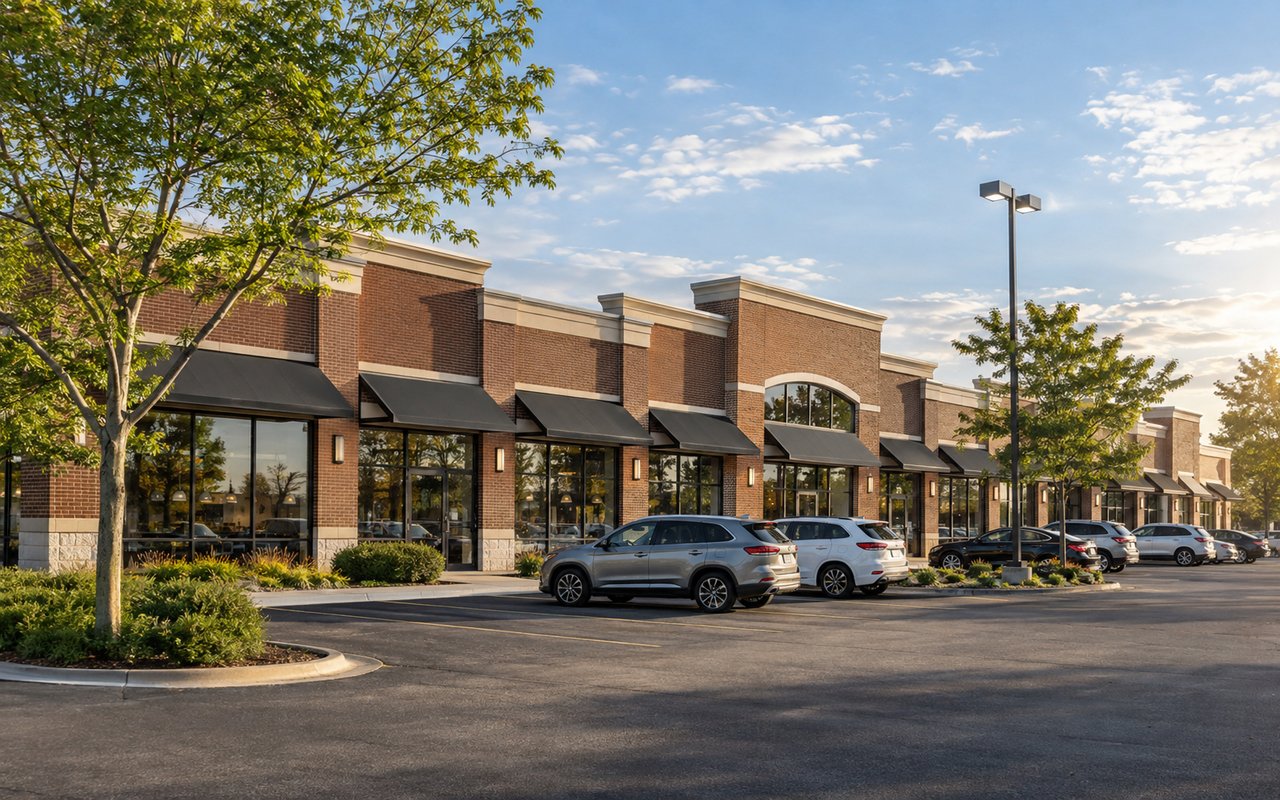
It is easy to get anchored on base rent, but visibility often has a bigger impact on daily sales. In Melrose Park, that means carefully reviewing frontage, sightlines, curb cuts, and ease of ingress and egress on major corridors like North Avenue, Lake Street, Mannheim Road, and near Winston Plaza.
A lower-rent site can become expensive if customers miss the entrance, struggle with turns, or cannot safely access the parking area. By contrast, a site with clearer frontage and smoother traffic flow may justify a higher occupancy cost if it supports stronger sales volume. The right question is not just what the space costs, but what it helps your business capture.
If a site sits on the Lake Street Corridor, pay special attention to local sign rules. The village ordinance for that corridor covers frontage on Lake Street and or Broadway Avenue within defined boundaries and was written for an area with high pedestrian and vehicular traffic. That same ordinance imposes tighter limits on sign area and sign height than a more typical suburban site, so signage assumptions should be tested early.
Parking Is a Site-by-Site Question
Parking can look straightforward during a daytime tour and become a real issue once your hours, customer patterns, and street rules come into play. In Melrose Park, parking should be reviewed block by block rather than assumed villagewide.
The village’s summer parking rule allows parking on both sides of the street from Friday at 5 p.m. to Monday at 9 a.m. from April 1 through October 31, but those hours do not apply west of 25th Avenue or in Winston Park. East-west streets also have a 2 a.m. to 6 a.m. parking restriction. For restaurant operators, that means evening and weekend conditions may vary depending on exactly where you locate.
If your model relies on dine-in peaks, pickup, or delivery staging, test the parking field during your expected rush times. A site that works for a general retail tenant may not work as well for a restaurant with quick table turns, carryout demand, or driver congestion.
Public Investment Can Support a Corridor
Another useful signal in Melrose Park is public reinvestment. The village’s financial statements identify both the Lake Street Corridor TIF District and the 25th & North Ave TIF District. Village notes say redevelopment plans have included utilities, public parking, intersections, traffic signalization, streets, and landscaping.
That does not guarantee a specific site will outperform, but it does suggest some corridors may benefit from broader redevelopment momentum. For operators, public improvements can matter because they shape access, appearance, circulation, and customer experience around the property. In practical terms, a corridor with ongoing public support may offer a stronger long-term setting for a restaurant than a similar site without that backdrop.
Local Rules to Confirm Before Signing
Before you commit to a lease, confirm the local approval path. Melrose Park’s building department lists forms and processes related to zoning, sign applications, right-of-way permits, building permits, contractor registration, and certificate-of-compliance requirements. Code enforcement also oversees building and zoning codes, sign code, nuisance codes, and property maintenance codes.
For a restaurant, these items should be part of your site review before money is spent on plans or construction. A location that seems workable at first glance may become more complicated if signage is constrained, utility work affects timing, or permits require additional steps. Early confirmation can save both time and capital.
You should also account for village tax obligations tied to operations. Melrose Park applies a 2% local prepared food and beverage tax that is due monthly on the 20th of the following month. If your lease includes a controlled parking lot or garage, the village also has a parking tax form showing a $12.50 monthly charge per parked vehicle.
Lease Terms That Matter Most
Restaurant leases are often won or lost in the fine print, not the asking rent. Core lease points typically include the parties, the space, fixed rent, free rent or abatements, lease term, and landlord work or tenant-improvement allowance. Common lease structures can include net leases, gross leases, and percentage-rent leases.
For restaurant users, several other terms deserve close attention:
- Permitted-use language
- Permit contingencies
- Signage rights
- Exclusive-use restrictions
- Continuous-operation clauses
- Co-tenancy conditions
- Relocation clauses
- Assignment and sublease rights
- Renewal or extension options
- Security deposits and guarantees
- Alteration rights
- Common-area operating expenses and audit rights
In Melrose Park, these items carry extra weight because the market already has dense restaurant clustering and corridor-specific parking and signage considerations. In a multi-tenant center, co-tenancy and exclusive-use terms can affect whether your concept benefits from neighboring traffic or gets boxed in by competing uses. A weak signage clause can also undercut an otherwise strong location if local rules already limit what you can install.
Build a Better Site Checklist
If you are narrowing down restaurant options in Melrose Park, use a practical checklist before you negotiate too far. A disciplined review process often helps you avoid locations that look good on paper but create friction in real operations.
Core Site Checklist
- Confirm the exact corridor and whether it aligns with your target customer flow
- Review frontage, visibility, and ease of access from the street
- Test parking during lunch, dinner, and weekend peak periods
- Verify local zoning and restaurant use approval
- Confirm sign requirements, especially on the Lake Street Corridor
- Review permit needs for build-out, utility work, and right-of-way items
- Understand the 2% prepared food and beverage tax
- Check whether any parking tax applies to the lease
- Negotiate use, signage, co-tenancy, and relocation language carefully
- Model total occupancy cost, not just base rent
A checklist like this helps you compare sites more objectively. It also gives you a better framework for landlord discussions, especially when you are asking for concessions, timing protections, or delivery obligations.
Where Local Brokerage Support Helps
In a market like Melrose Park, restaurant site selection is rarely just a real estate decision. It touches leasing strategy, local approvals, signage, parking, taxes, and build-out timing all at once. That is where specialized commercial guidance can create real value.
Brokerage support is especially useful when a deal includes corridor-specific sign rules, local parking constraints, village taxes, building permits, right-of-way work, and multi-tenant lease issues like co-tenancy or exclusive-use language. Sequencing those moving parts well can reduce delays and improve your final lease position.
For operators expanding in Chicago’s suburbs, the goal is not simply to find available space. It is to secure a site that fits your concept operationally, financially, and locally. In Melrose Park, the best restaurant location is usually the one that balances visibility, parking, co-tenancy, and approvals as carefully as rent.
If you are evaluating restaurant space in Melrose Park or comparing suburban retail corridors across the Chicago area, Rafidia Team can help you assess sites, negotiate smarter lease terms, and move with more confidence.
FAQs
What makes Melrose Park a strong restaurant market?
- Melrose Park combines a compact trade area, meaningful retail sales activity, established restaurant corridors, and useful transit access, which can support food-service demand when the site is chosen carefully.
Which Melrose Park corridors are most relevant for restaurant site selection?
- Key areas to review include North Avenue, Lake Street, Mannheim Road, Winston Plaza, 19th Avenue, and 25th Avenue because the village directory shows existing restaurant clustering in those locations.
How important is parking for a restaurant in Melrose Park?
- Parking is very important because local street parking conditions and restrictions vary by area, so you should evaluate each site during your actual expected operating hours.
What local taxes should restaurant operators review in Melrose Park?
- Operators selling prepared food and beverages should account for the village’s 2% local prepared food and beverage tax, and some leases involving controlled parking lots or garages may also involve a parking tax.
What lease terms matter most for a Melrose Park restaurant space?
- In addition to rent, focus on permitted use, signage rights, exclusive-use language, co-tenancy, relocation clauses, renewal options, tenant-improvement support, and operating expense terms.
Why should a restaurant tenant get site selection help in Melrose Park?
- Specialized support can help you evaluate visibility, parking, local permitting, sign rules, taxes, and lease terms together so you make a more informed decision before signing.