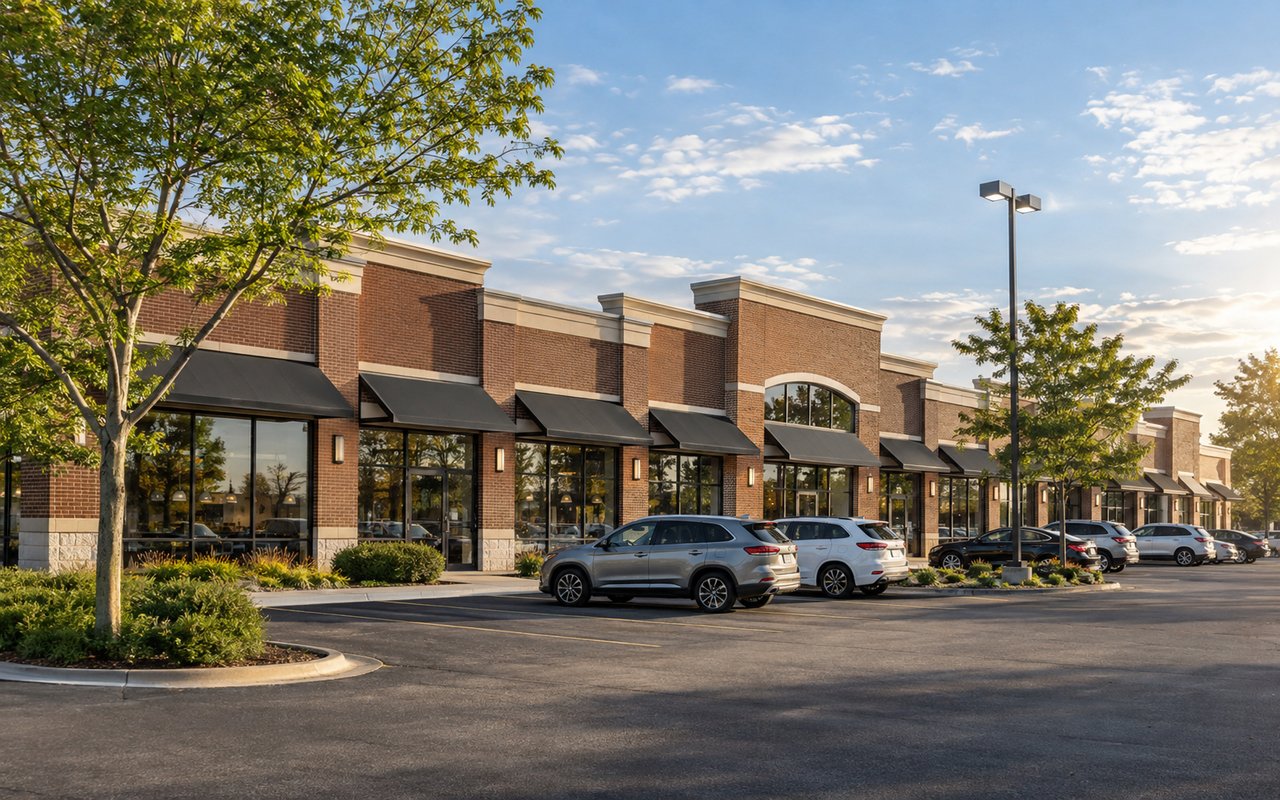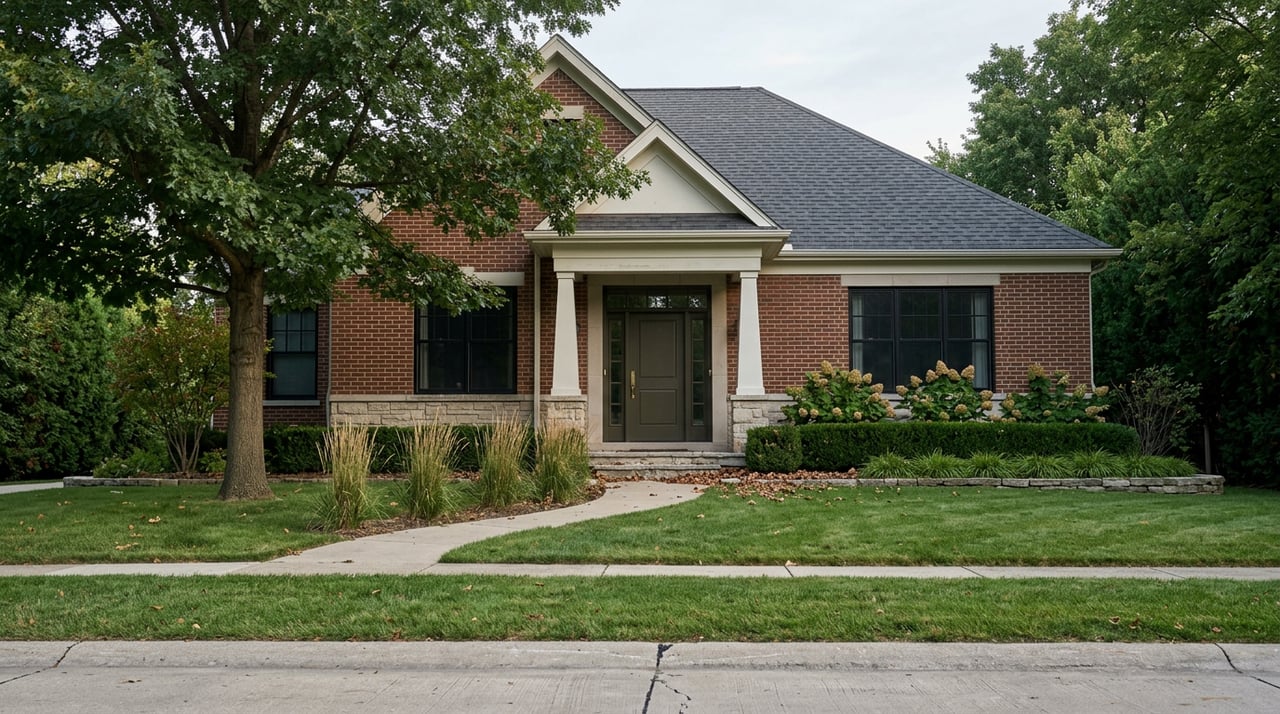
Drive through White Eagle on a summer afternoon and every block looks the same. Brick and stone facades, cul-de-sac streets, the golf course threading behind the fairway lots. Same clubhouse, same HOA, same elementary school drop-off line. But the community sits directly on top of the DuPage-Will county line, and that means two houses on the same cul-de-sac can be served by different police departments, different fire departments, and different water and sewer systems, depending on which side of an invisible boundary the lot happens to fall on. One house calls Naperville. The other calls Aurora.
That split is not a quirk limited to one golf course neighborhood. It runs through the entire city, and it changes what a buyer is actually comparing when they look at two listings that both say "Naperville" in the address.
The Line Runs Through the Whole City, Not Just One Subdivision
Naperville spans two counties and portions of six townships. Most of the city sits in DuPage County, but a meaningful southern and eastern slice sits in Will County, and the boundary does not track any road, river, or landmark a buyer would notice on a drive-by. It shows up only on the assessor's parcel map.
As of August 3, 2026, the DuPage County side of Naperville carried a median effective property tax rate of about 2.05 percent, with a median annual bill of $9,065 against a median home value of $443,310. The Will County side carried a rate of about 2.35 percent, with a median annual bill of $12,734 against a median home value of $544,293. Averaging those two numbers into one citywide rate produces a figure that does not describe any actual parcel in the city. A buyer who budgets off a single blended Naperville tax rate is budgeting off a number that belongs to neither county.
What You're Actually Buying Along With the Rate
The tax rate difference is not random. It tracks a real difference in the housing stock itself, which is the part most buyers miss when they're comparing two homes by price alone.
| DuPage County side | Will County side | |
|---|---|---|
| Median effective tax rate | ~2.05% (Aug 2026) | ~2.35% (Aug 2026) |
| Median annual tax bill | $9,065 | $12,734 |
| Median home value | $443,310 | $544,293 |
| Typical era | Established, built mid-century through 1980s | Newer planned subdivisions, largely 1990s onward |
| School district | Naperville CUSD 203 | Indian Prairie CUSD 204 |
District 203 covers Central and North Naperville, the older, more walkable part of the city with strong access to the BNSF Metra line downtown. District 204 covers South and East Naperville, where the housing is newer, the lots tend to run larger, and the street grid is built around highway access to I-88, I-355, and Route 59 rather than a downtown core.
Hobson West, a District 203 neighborhood a mile south of downtown, was built mostly in the early 1980s and keeps HOA dues in the $43 to $58 per month range with a light touch on architectural review. White Eagle, a District 204 community built from the late 1980s into the mid-1990s with a newer section added in 2017, carries an average annual property tax bill of $15,576, well above the county-side medians, reflecting both the larger, newer homes and the Will County rate they sit under.
So when a buyer is choosing between a smaller, established home near downtown and a larger, newer home with a three-car garage and a golf course view, they are not just choosing square footage. They are choosing a tax rate, a school district, and often a fire and police jurisdiction, all bundled into the same decision, even when both listings share a Naperville mailing address and zip code.
The split shows up at a finer grain too. Within DuPage County alone, the 60564 zip code carried a median effective rate of about 2.23 percent as of the same date, while 60563 carried about 2.03 percent, a gap tied to which school district levy and local assessment district the parcel falls under rather than to the county line itself. County alone does not set the number. It is one layer in a stack of overlapping taxing bodies, and the parcel's specific address is what determines which layers apply.
The Deadline That Depends on Which Office You Mail To
The county split also changes how and when a homeowner can push back on an assessment, and the two processes do not run on the same calendar.
Will County's official complaint period for the 2026 tax year runs from August 12 through September 14, 2026. DuPage County works differently. Appeals start with the township assessor, and each of the townships covering Naperville publishes its own assessment roll on its own schedule, which opens its own filing window. A homeowner on the Will County side and a homeowner on the DuPage side of the same street could be working against two different deadlines, using two different forms, filed with two different offices, and a form meant for one county will not be accepted by the other.
It's also worth knowing that a lower bill on a neighbor's house is not, by itself, grounds for a successful appeal. The neighbor's parcel may carry a different exemption, a different tax code, or sit in a different county or school district entirely. An appeal has to compare genuinely similar parcels within the same taxing structure, not just a lower number down the block.
Checking Before You Write the Offer
Since the boundary doesn't show up on a curb, the only reliable way to know which system a specific house falls under is to check the parcel directly before making a decision based on price or taxes alone.
- Confirm the county. Look up the parcel through the DuPage County or Will County assessor's site rather than assuming based on the zip code or the listing's city name.
- Confirm the school district separately. District boundaries do not follow the county line exactly, so a DuPage parcel is not automatically in District 203 and a Will County parcel is not automatically in District 204.
- Ask which municipality provides fire, police, water, and sewer service for that specific lot, especially in communities like White Eagle that straddle the line.
- Pull the actual most recent tax bill for the parcel rather than relying on a citywide or countywide median, since the figure that matters is the one attached to that address.
A Few Straight Answers
Does the Will County side have worse schools than the DuPage side? No. Both District 203 and District 204 are strong, well-regarded districts. The difference between them is more about the age and layout of the surrounding neighborhoods than school quality.
Is DuPage always the cheaper option? Not automatically. The zip-level spread inside DuPage itself, with 60564 running higher than 60563, shows that the taxing district stack matters more than the county line by itself. A DuPage parcel in a newer subdivision with a higher local levy can carry a heavier bill than some Will County parcels.
Can I just pick the county with the lower rate and expect to save money? Only if the home itself is otherwise comparable. The lower DuPage rate is attached to an older, smaller housing stock on average, and the higher Will County rate is attached to newer, larger homes. Comparing the rate without comparing what it applies to misses the point of the split entirely.
Naperville's median price tells you what the city costs. It does not tell you which of two very different tax systems, school districts, and municipal service areas a specific address sits inside. That distinction is decided parcel by parcel, and it's worth confirming before an offer goes in, not after the first tax bill arrives.
If you're comparing homes across Naperville's county line, or anywhere else in the Chicago suburbs, and want someone who can walk through the parcel-level details with you before you write an offer, the Rafidia Team offers a straightforward way to start that conversation. Schedule a Private Consultation and bring your list of addresses.