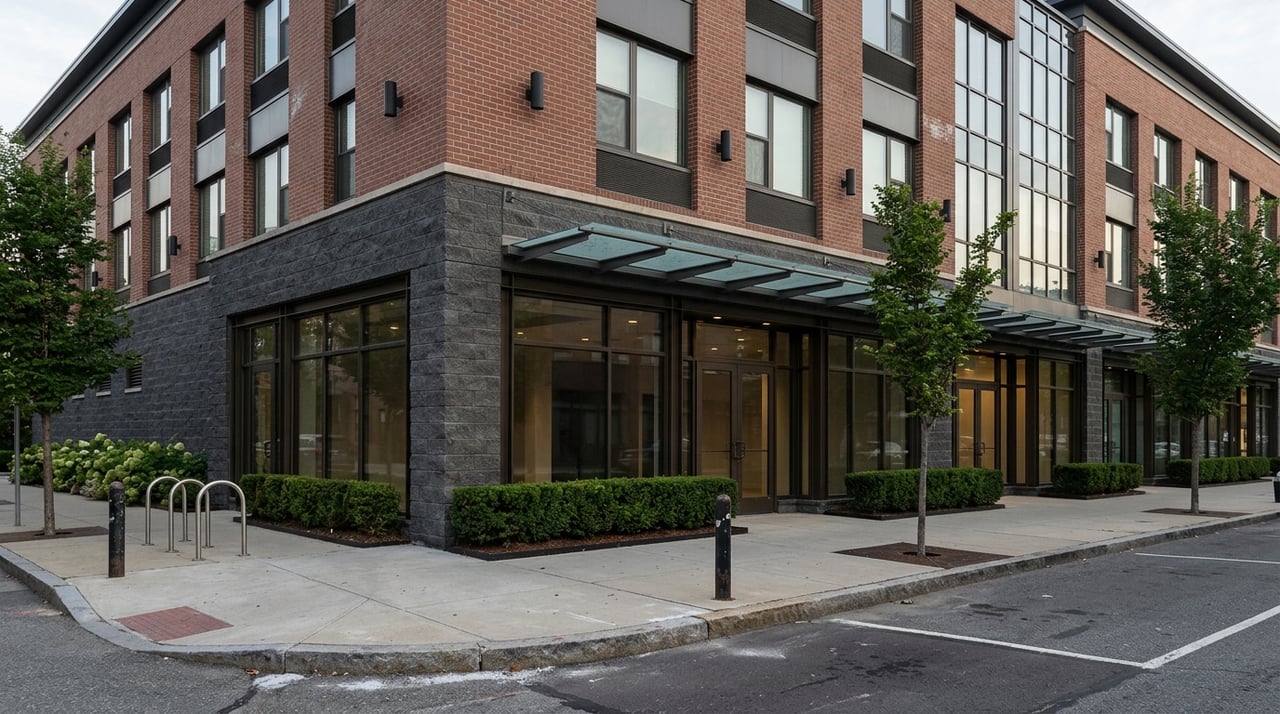
If you look at Rosemont like a typical neighborhood retail market, you may miss what actually drives value there. This is a destination-first submarket where airport traffic, convention guests, hotel stays, and entertainment visits often matter more than local household count alone. If you own, lease, or are considering a retail or mixed-use asset in Rosemont, this snapshot will help you focus on the factors that really move performance. Let’s dive in.
Why Rosemont Works Differently
Rosemont is built around visitor activity. The village sits about five minutes from O'Hare and centers much of its commercial energy around the Donald E. Stephens Convention Center, Parkway Bank Park, The Pearl District, Allstate Arena, Rosemont Theatre, and Fashion Outlets of Chicago.
That concentration matters because the convention center has grown to 840,000 square feet and attracts more than 1 million guests annually, according to village information. O'Hare also reported an all-time passenger record in July 2025, with about 1,020 daily direct flights to 181 U.S. cities and 126 international destinations as of May 2025.
For investors, that means Rosemont behaves less like a rooftop-driven strip center market and more like a hospitality, entertainment, and travel-linked retail environment. The right asset can benefit from steady flows of visitors who are already in the area for meetings, flights, events, dining, and shopping.
Demand Drivers in Rosemont
Visitor traffic matters most
Rosemont had 3,952 residents in the 2020 Census, and the 2024 ACS reported a median household income of $63,517. That local base is relatively small compared with the scale of commercial activity in the village.
Because of that, retail underwriting in Rosemont should put heavier weight on visitor, employee, and event traffic. A center that captures airport, hotel, or convention spillover may outperform a property that looks acceptable on household counts but lacks access or visibility.
Hotels support daily spending
The village reports 6,218 hotel rooms. That large hotel base helps support recurring breakfast, lunch, dinner, and late-night demand across restaurants, convenience uses, and service retail.
This matters for mixed-use and retail owners because hotel demand is not tied to a single shopping trip. It creates repeat spending patterns from travelers, conference attendees, and event guests who need places to eat, meet, and spend time nearby.
Sales activity supports the market story
Rosemont’s 2026 budget lists $18.75 million in sales tax receipts and a $109.9 million general fund budget. While that does not replace property-level analysis, it does reinforce how important commercial activity and visitor spending are to the village’s fiscal model.
For owners and buyers, that is an important market signal. In Rosemont, commercial performance is not a side story. It is central to how the local economy functions.
Key Retail and Mixed-Use Nodes
Parkway Bank Park
Parkway Bank Park is a 200,000-square-foot entertainment and dining complex with 15 venues. It also benefits from seasonal programming and close proximity to the convention center, Rosemont Theatre, and transit.
This is one of the clearest examples of Rosemont’s retail formula. Entertainment, food, and hospitality work together here to create steady demand beyond simple convenience shopping.
Fashion Outlets of Chicago
Fashion Outlets of Chicago adds another major draw. It is described as the region’s only two-level indoor luxury outlet experience and includes more than 130 designer brands, along with Bloomingdale’s The Outlet Store, Nordstrom Rack, and Saks OFF 5TH.
Its airport-adjacent location strengthens Rosemont’s role as a destination retail market. That gives nearby assets an added chance to benefit from regional and traveler spending.
The Pearl District
The Pearl District reflects Rosemont’s newer mixed-use direction. Village information highlights uses such as Dave & Buster's, Truluck's, Carmine's, Thorn Restaurant & Lounge inside The Rose Hotel, Rose Hotel Chicago O'Hare, and EXP Rosemont.
The Rose Hotel includes a free airport shuttle and more than 6,000 square feet of event space. That blend of lodging, food, entertainment, and event activity is a useful model for how mixed-use value can be created in Rosemont.
How to Evaluate a Rosemont Asset
Start with access and capture
In Rosemont, access quality can be just as important as the building itself. Parkway Bank Park is roughly a mile from the Rosemont CTA Blue Line stop, about half a mile from the Metra station, and connected by I-90, I-294, River Road, and Balmoral.
When you evaluate a property, ask a simple question: can this site realistically capture airport, convention, hotel, or entertainment traffic? Visibility, signage, parking, and pedestrian linkage all matter because weak access can limit performance even in a strong submarket.
Match the tenant mix to the market
Rosemont is not the place to force a generic neighborhood strip formula onto every asset. Tenant mix should reflect how people actually use the area, which often means a blend of travel-related services, dining, convenience retail, fitness, and entertainment.
This is especially important for repositioning or lease-up strategy. A space that serves visitors, workers, and event traffic may have more traction than one that depends mostly on nearby households.
Pay attention to bay size
National retail leasing trends also support a practical point for local owners. JLL reported that nearly 70% of leases were for 2,500 square feet or less, and almost 90% were under 5,000 square feet in its Q4 2025 U.S. retail report.
For Rosemont owners, that makes right-sized bays and flexible in-line space worth serious attention. Smaller, adaptable spaces may give you more options when targeting service, food, or convenience-oriented users.
Underwrite lease structure carefully
Retail owners should also look closely at lease structure, not just face rent. NNN leases are commonly used in retail and shift operating expenses, taxes, and insurance to the tenant, while gross and modified gross structures can change how costs are shared.
In a market like Rosemont, that matters because some uses may have stronger sales volatility than others. It is worth asking whether the lease structure fits both the property’s capital needs and the tenant’s operating reality, especially in entertainment-heavy or hospitality-linked environments.
Stay realistic on rent growth
JLL reported U.S. retail vacancy at 4.3%, constrained construction, and Chicago retail rent growth of 2.2% year over year. That supports a disciplined approach to rent assumptions.
In other words, a strong Rosemont story should still be paired with practical underwriting. Well-located, well-configured space may command attention, but performance still depends on the asset’s ability to capture real traffic and support the right tenant mix.
Repositioning and Approvals
If your plan includes remodeling, a restaurant conversion, façade work, or parking-lot improvements, check village requirements early. Rosemont states that businesses operating in the village need a business license, commercial office buildings use a certificate of registration instead, and building permits are required for starting, expanding, or remodeling a business.
That can directly affect your timeline and capital plan. A good repositioning strategy in Rosemont should account for approvals early, not after lease negotiations or construction pricing are already underway.
Rosemont also uses tax increment financing as a redevelopment tool, and the village’s comprehensive plan serves as the official policy guide for desired development direction and preferred investments. For investors, that means public-process awareness can matter nearly as much as market timing.
Best-Fit Investment Types
Not every property type is equally suited to Rosemont’s demand profile. In general, the strongest candidates are assets that can monetize destination traffic rather than rely only on nearby rooftops.
That often includes:
- Small-bay shopping centers
- Pad sites
- Ground-floor retail in hospitality or mixed-use projects
- Entertainment-district parcels
By contrast, weaker candidates may be spaces with limited visibility, poor access, or a business plan built only around local resident demand. In Rosemont, the market story is driven by mobility, visitors, and activity clustering.
When Broker Support Adds the Most Value
The best time to bring in brokerage support is usually when several moving parts need to be coordinated at once. That includes multiple vacancies, an anchor change, a major lease rollover, a mixed-use conversion, or a planned sale.
In those moments, tenant mix, lease structure, village approvals, and pricing strategy all connect. This is where a team with retail leasing, investor sales, and local market fluency can help you move from a market story to an executable plan.
For owners and private investors in the Chicago area, Rosemont can offer a compelling opportunity, but only when you evaluate it on its own terms. If you are weighing a lease-up, repositioning, acquisition, or disposition in Rosemont, the right strategy starts with understanding how destination traffic translates into asset performance. To discuss your property or investment goals, schedule a private consultation with Rafidia Team.
FAQs
What makes Rosemont retail different from a typical suburban retail market?
- Rosemont is driven more by airport, hotel, convention, and entertainment traffic than by local household count, so destination demand plays a much bigger role in asset performance.
What property types fit best for Rosemont retail investment?
- Small-bay shopping centers, pad sites, ground-floor retail in hospitality or mixed-use projects, and entertainment-district parcels tend to align best with Rosemont’s visitor-focused demand profile.
What should investors evaluate first in a Rosemont mixed-use property?
- Start with access, visibility, signage, parking, and pedestrian linkage, because a property needs to capture spillover traffic from O'Hare, hotels, events, and convention activity.
What lease issues matter in Rosemont retail assets?
- Beyond rent, you should review whether the lease structure properly allocates taxes, insurance, operating costs, and any special charges in a way that fits the property and tenant use.
What approvals should owners check before repositioning a Rosemont commercial property?
- Owners should confirm business license or certificate requirements and review whether building permits will be needed for expansion, remodeling, restaurant conversion, façade work, or site improvements.
When should an owner hire a broker for a Rosemont investment property?
- Broker support is especially valuable during multi-vacancy lease-up, anchor changes, major rollovers, mixed-use conversion planning, site selection, or sale preparation.